

Artificial Intelligence (AI) is reshaping banking worldwide—boosting efficiency, strengthening risk management, and enabling hyper-personalized services. Banks that scale AI are seeing 22–30% productivity gains and measurable uplifts in revenue and profitability. In the Gulf Cooperation Council (GCC), including Kuwait, the conditions are especially favorable: strong government backing, ample investment capacity, and digitally savvy customers have accelerated adoption of AI solutions such as 24/7 chatbots and advanced analytics. Leading regional institutions—from Al Rajhi Bank to Qatar National Bank and the National Bank of Kuwait (NBK)—are already embedding AI across operations, signaling that AI has moved from pilot to mainstream in the Middle East. Added competitive pressure from fintechs and big-tech entrants is further pushing incumbents to modernize decisioning, pricing, and customer journeys with AI, especially in retail and SME segments.
In Kuwait, momentum is clear. NBK has rolled out Microsoft’s generative-AI Copilot enterprise-wide to streamline workflows and empower staff, while Kuwait Finance House (KFH) has introduced an Azure-based “RiskGPT” to enhance risk intelligence and decision support. Regulators are enabling this shift: the Central Bank of Kuwait (CBK) has issued digital banking and e-payment guidelines that set expectations for governance, security, and data protection; a draft open-banking framework points to data-driven, interoperable services; and a forthcoming National AI Strategy (2025–2028) emphasizes economic value creation, workforce enablement, and digital transformation. The result is an operating environment primed for responsible AI at scale. These policy signals align with Kuwait Vision 2035, creating clear incentives for banks to invest in data platforms, model governance, and talent pipelines that can operationalize AI quickly and safely.
This rapid evolution presents both opportunity and obligation for banking leaders. Executives must understand how AI can transform services and business models—automating routine processes, elevating customer experience, and unlocking new growth—while also managing risks around privacy, cybersecurity, bias, and compliance. Kuwait’s ecosystem is already building leadership capacity (e.g., NBK’s AI masterclasses; KIBS programs under CBK guidance), but governance remains paramount: explainability, robust oversight, and strong data controls are essential to sustain trust. This training is designed to meet that dual mandate—equipping executives with the context, tools, and practical know-how to champion high-impact, governance-ready AI initiatives in an in-person, collaborative setting. Participants will leave with a clear action plan for board-level AI oversight and model-risk management, as well as a prioritized roadmap of use cases that can deliver near-term ROI while complying with local regulatory expectations.
Objectives of the Training
- Understand how AI is changing banking globally and in the GCC, and what this means for Kuwait’s financial sector.
- Learn where AI can make banks more efficient and profitable—such as fraud prevention, credit scoring, smarter service, and tailored products.
- Recognize challenges like data security, compliance, and fairness, and how to respond in line with Central Bank guidelines.
- Explore real cases from NBK, KFH, and other regional banks to understand what has worked and why.
- Know how to design pilots, scale projects, and align with Kuwait Vision 2035 and national AI plans.
- Gain confidence to ask the right questions, guide investment choices, and explain AI to boards and regulators.
- Learn how to lead teams through change, build trust, and combine human expertise with AI to stay competitive.
Skills Developed and Competencies Gained
- Gain a clear, business-level grasp of core AI concepts and terms, so you can translate possibilities into strategy and speak fluently with both boards and technical teams.
- Strengthen data-driven decision-making by interpreting AI insights (e.g., risk models, customer analytics) while combining them with sound managerial judgment.
- Learn to spot high-value AI opportunities in your bank, distinguish ROI-positive use cases from hype, and prioritize a realistic pipeline of pilots.
- Assess vendors and models, set up governance (committees, policies, controls), and ensure compliance with Kuwait/GCC requirements.
- Communicate the vision, address staff concerns about automation, organize cross-functional teams, and plan upskilling and new roles where needed.
- Anticipate and mitigate bias, ensure transparency and explainability, protect customer consent and data, and align with your bank’s values.
- Present AI business cases to boards and regulators, report results clearly, and champion initiatives across technical and operational teams.
Agenda & Training Format
The program will be delivered in-person with an emphasis on interactivity, combining expert presentations, group discussions, case studies, and hands-on exercises. The half-day (4-hour) format is designed for ~20–25 participants and covers all core topics, balancing informative content with engaging interactions to ensure executives remain active participants throughout the learning process.
Introductions + ice-breaker: “AI in my daily life” — everyone shares one AI tool they use or an expectation. Outline objectives and ground rules: open discussion, no technical background needed.
Interactive talk on global, GCC, and Kuwait trends; explain in plain terms (not technical) how AI is changing banking. Use live polling (“Has your bank already used AI?”).
Step-by-step framework: readiness, pilots, scaling. Mini-discussion: “Which department in your bank is ready for AI first?” Groups map out where AI could start in their bank.
Leadership focus: how to communicate, build trust, reskill staff, and create an innovation culture. Sharing circle: participants discuss past change initiatives and lessons for AI.
Teams (4–5 people) design a 1-year AI plan (scenario or common challenge). Use flipcharts to define value, resources, risks, and KPIs. Role-play pitches: each team presents to “the board.” Feedback from peers.
Short quiz/trivia on the day’s lessons; each participant writes 1–2 action points for their bank; group shares; closing remarks and optional group photo.
Workshop Facilitator
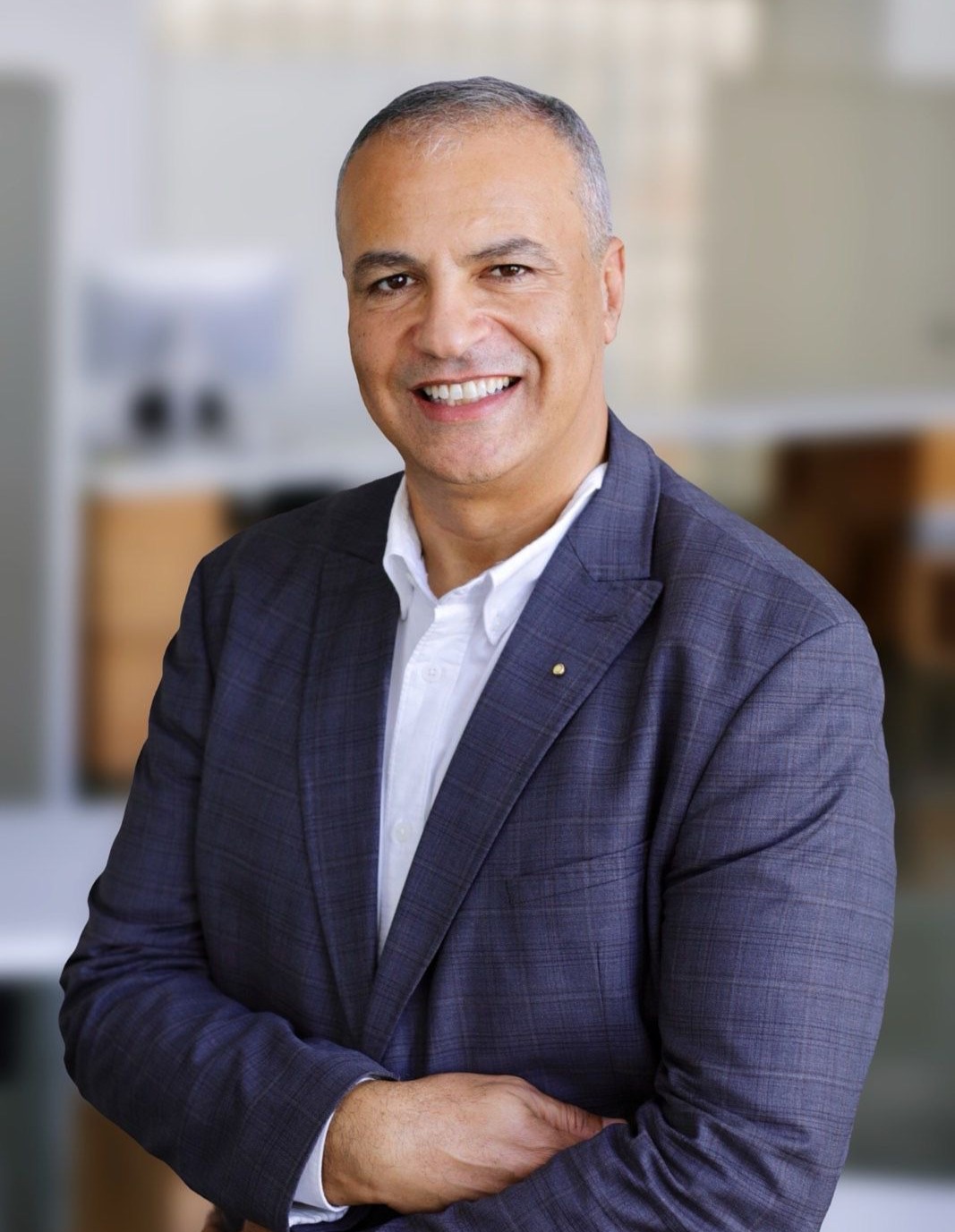
Adel Ben Youssef
Professor of Economics, Université Côte d’Azur, France
Adel Ben Youssef is an Associate Professor of Economics at Université Côte d’Azur and a permanent member of the CNRS research laboratory GREDEG (UMR 7321). He is also an associate researcher at the Economic Research Forum (Cairo) and the Global Labor Organization (Bonn). Internationally recognized for his work on ecological and digital transitions, he has made major contributions to advancing the concept of the twin transition—the synergy between digital innovation and environmental sustainability—as a key framework for public policy, industrial development, and climate strategies. With over two decades of academic and advisory experience, Professor Ben Youssef has published more than 100 peer-reviewed articles in top international journals and contributed to numerous collective works, notably on Industry 4.0, smart cities, green finance, and labor market transformations. He has served as Tunisia’s climate finance negotiator at seven consecutive COP summits (COP23 to COP29), reflecting his long-standing engagement in global climate diplomacy. He also acts as a scientific advisor and expert for international organizations including the UNDP, UNIDO, UNEP, UN-Habitat and UNOPS. He is Editor-in-Chief of Platforms (MDPI) and Associate Editor of Development and Sustainability in Economics and Finance (Springer) and Green and Low-Carbon Economy. Professor Ben Youssef is among the top 2% of worldwide scientists ranked by Stanford University in collaboration with Elsevier and 1% of economists worldwide according to ScholarGPS.