In modern aviation, safety and sustainability are inherently interconnected, as both depend on resilient systems, informed leadership, and the optimization of human and organizational performance. Human Factors (HF), Crew Resource Management (CRM), and Safety Management Systems (SMS) form the scientific and operational foundations of this interdependence. These three disciplines together constitute an integrated socio-technical system in which human behavior, team coordination, and organizational processes interact to determine safety and performance outcomes. HF provides the cognitive and behavioral science basis for understanding human capabilities, limitations, and decision-making in complex operational contexts. CRM applies these principles at the team level, promoting communication, shared situational awareness, and effective leadership. SMS institutionalizes these human and team insights within an organizational framework for proactive risk management, safety assurance, and continuous learning. Grounded in contemporary safety science and resilience engineering, this workshop recognizes that effective leadership in sustainable aviation requires mastery of these fundamental domains, aligning human, technical, and organizational systems toward long-term safety and sustainability.
This four-hour workshop combines academic insight with operational experience to examine how leadership connects HF, CRM, and SMS within a coherent, human-centered framework for sustainable aviation. Through case studies, scenario-based exercises, and interactive discussions, participants will explore how leadership shapes decision-making, teamwork, and safety culture, and how these in turn drive sustainability outcomes. Participants will learn to analyze human performance, apply CRM strategies to enhance team effectiveness, integrate SMS processes to achieve predictive and proactive safety management, and evaluate leadership behaviors that foster a just, learning-oriented, and sustainable safety culture. By the end of the workshop, attendees will understand how leadership acts as the catalyst linking human performance, organizational learning, and sustainable aviation excellence.
Key Topics
- Leadership in safety and sustainability
- Human Factors and human reliability in aviation operations
- Crew Resource Management for flight, maintenance, and airport teams
- Safety Management Systems and organizational learning
- Error management and just culture development
- Human-centered safety as a foundation for sustainable aviation
Intended Audience
Flight and cabin crew, maintenance engineers, airport and ground operations personnel, air traffic controllers, safety and quality managers, aviation educators, and researchers interested in leadership, human performance, safety, and sustainability.
Workshop Agenda
- CRM history and its key modules.
- How human factor and interaction effects reliability, safety, and operational efficiency.
- Explore CRM principles: communication, situational awareness, and teamwork.
- Case example: human reliability in flight and maintenance contexts.
- Discussion: how effective teamwork reduces operational waste and supports sustainability.
- CRM leadership module in aviation.
- Leadership management styles and its barriers.
- Apply CRM competencies across flight, maintenance, and airport operations.
- Group activity: practicing how to identify CRM shortcomings in an incident.
- Review the four pillars of SMS and their relationship to HF and CRM.
- Discuss leadership responsibilities in safety risk management and promotion.
- Examine how SMS data supports predictive, proactive, and sustainable safety outcomes.
- Group exercise: designing sustainability-linked safety indicators and KPIs.
Workshop Facilitators

Capt. Mohannad AlAyyar
Capt. Mohannad Alayyar is a distinguished aviation leader with more than 28 years of civil and commercial aviation experience. He served as a Senior Captain at Kuwait Airways and was entrusted with the key leadership role of Fleet Manager for the A320 and A340 fleets, where he oversaw operational performance, training standards, safety compliance, and crew development. Throughout his career, he has flown several aircraft types, including the Airbus A300, A310, A320, A330, and the Boeing B777, accumulating extensive international operational knowledge and leadership experience. Capt. Alayyar is also the Chairman of the Kuwait Aircraft Engineers and Pilots Association, leading strategic initiatives that strengthen aviation governance, workforce development, and compliance with ICAO and Kuwait Civil Aviation Regulations. He also previously served as a Flight Safety Inspector at the Kuwait DGCA, contributing to national-level safety oversight, operational auditing, and regulatory alignment. He is widely recognized for his commitment to elevating aviation safety culture, mentoring professionals, and promoting the highest operational and ethical standards in the aviation industry.
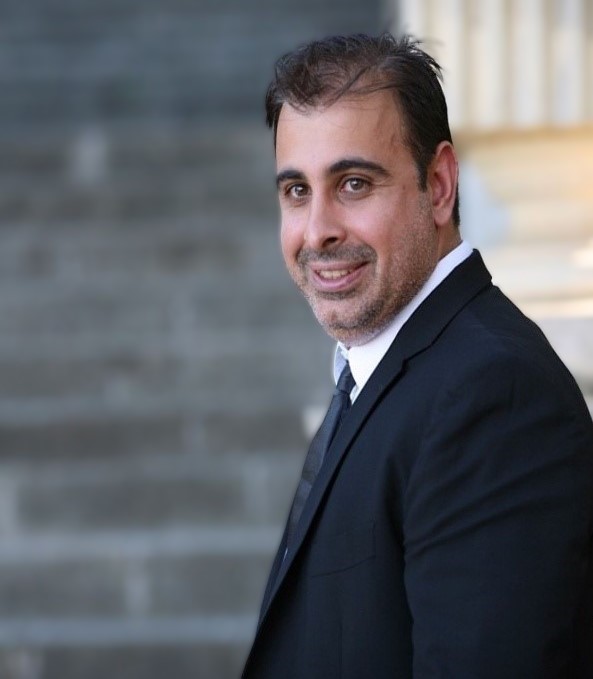
Capt. Manaf Hussain
Captain Manaf Hussain is a highly accomplished individual in commercial aviation, possessing over 32 years of experience marked by a commitment to operational excellence, pilot training, and crew resource management (CRM). He is type-rated on the Airbus A320, A321, A330-8, and A330-9, having served as a Training Pilot since 2011 and an Instructor since 2018. Beyond the flight deck, Captain Hussain is a certified safety and human factors expert, operating as a CRM Facilitator since 2008 and holding DGCA approval as a CRM Instructors Trainer since 2014. His influence extends to corporate governance, having served two terms as a board member, and one term as the Vice President, for the Kuwait Airways Employees Union between 2014 and 2018, in addition to contributing as a developer in several aviation and cargo start-up companies.

Eng. Bassem Djedi
Bassem Djedi is an Instructor and the Deputy Head of Aviation Academic Programs at the Australian University (AU) in Kuwait. In his teaching and leadership roles, his specific instructor areas include Human Factor and Error Management, Fundamentals of Safety and Risk Management, and Project Management, alongside critical aviation disciplines such as Safety Management Systems (SMS) and general Human Factor studies. His academic qualifications are comprehensive, including an MSc in Aerospace Engineering and an MScR in Aviation, Aerospace and Electrical/Electronic Engineering, both from Coventry University in the United Kingdom. Eng. Djedi’s research focuses on the intersection of aviation safety and engineering analysis, specifically in Safety Management Systems (SMS) and Human Factors Studies.